Etched and cured
UV printing
UV printing sprays ink onto a hard surface and cures it solid in the same instant with ultraviolet light, so it bonds to materials that would reject ordinary ink — wood, metal, glass, acrylic, coated stone. It reproduces full colour and photographs on rigid and gently curved items, and because the ink cures on contact rather than soaking in, it sits as a thin durable film that resists fading and scratching. The design consideration is that the item’s own surface is part of the finished piece: grain, texture and sheen show through and around the ink.
- Colour range
- Full colour
- Photographs
- Yes
- Soft transparency
- Supported
- Materials
- Wood, metal, glass, acrylic, coated stone
- Surface
- Flat and gently curvedNot sharply contoured
- File formats
- PNG, JPG, SVG300 DPI at printed size
How it works
The print head lays ink onto the item and an ultraviolet lamp travelling with it cures each pass instantly. Because the ink hardens on contact instead of drying by absorption, it never has a chance to spread or soak in — which is what lets it hold a sharp edge on non-porous surfaces like glass and steel.
The print is applied to the item itself. It is not a sticker, a decal or a wrap, and there is no film edge to lift. Curing also releases no solvent fumes, which is a genuine environmental advantage over older hard-goods printing.
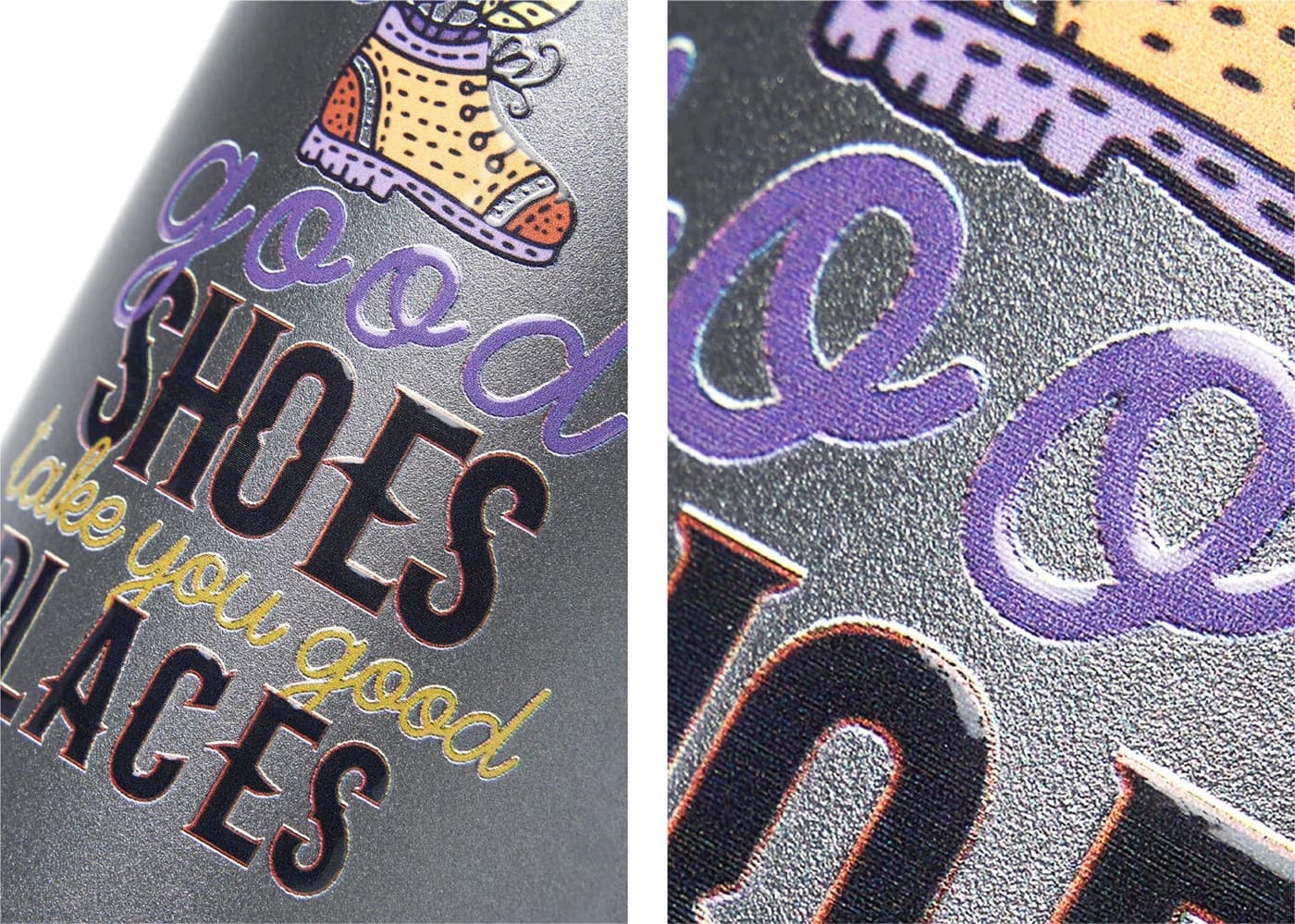
The material shows through
This is the fact that most affects how a design should be built. UV ink is a thin layer on a surface that has its own colour, grain and reflectivity, and that surface remains visible — through lighter parts of the artwork and around every unprinted area.
On bare wood, the grain reads through the print and warms every colour. On brushed metal, the brushing catches light across the design. On a coated white blank, the print behaves much more like paper. Choose the material as deliberately as the artwork, because on these products the variant you pick is a finish rather than a background colour.
White in your artwork is worth thinking about specifically: depending on the item it is either printed as white ink or left as bare surface. If a white element is doing real work in your design, it is safer to give it a defined edge than to rely on it separating from an unprinted area.
Surface texture and close inspection
The print head builds the image in passes across the item. On close inspection — hand-held, in raking light — faint horizontal lines or a fine grain can sometimes be visible in the printed area. This is characteristic of the process rather than a fault, and it disappears at normal viewing distance.
Designs with large expanses of flat, even colour show it most, since there is nothing else for the eye to look at. Artwork with texture, detail or tonal variation across it hides the effect entirely.
Gentle curves print well; sharp contours and deeply recessed areas do not, because the head must maintain a consistent distance from the surface. On tapered items like tumblers, expect a small amount of distortion toward the narrow end.
Do this, not that
Do
- Pick the material as deliberately as the artworkThe surface shows through and around the ink — it is part of the finished piece.
- Supply 300 DPI artwork at the printed sizeThe method holds fine detail, so resolution is the limiting factor rather than the process.
- Give white elements a defined edgeWhether white prints as ink or as bare surface varies by item.
- Add texture or tonal variation across large areasFlat expanses of even colour are where the process’s fine banding is most visible.
Avoid
- Expecting ink to hide wood grain or brushed metalThe layer is thin and the surface beneath stays visible through it.
- Detail placed on sharp contours or in deep recessesThe print head needs a consistent distance from the surface.
Common questions
- What is UV printing?
- A printing method in which ink is applied directly to a hard surface and cured solid by ultraviolet light in the same pass. Because the ink hardens on contact rather than soaking in, it bonds to non-porous materials such as glass, metal and acrylic while holding a sharp edge, and it resists fading and scratching.
- Is a UV print a sticker or a decal?
- No. The ink is printed onto the item itself and cured there, so there is no film, no adhesive and no edge that can lift. What you feel is a very thin layer of hardened ink on the surface of the product.
- Why can I see faint lines in my UV print?
- The print head builds the image in passes across the item, and on close inspection in raking light those passes can leave a faint horizontal grain. It is characteristic of the process rather than a defect, is invisible at normal viewing distance, and is most noticeable across large areas of flat even colour.
- Can UV printing cover the colour of the item underneath?
- Only partially. The ink layer is thin, so the material’s own colour, grain and sheen show through lighter parts of the artwork and around every unprinted area. Choose the material as part of the design rather than expecting the print to conceal it.
Products made this way
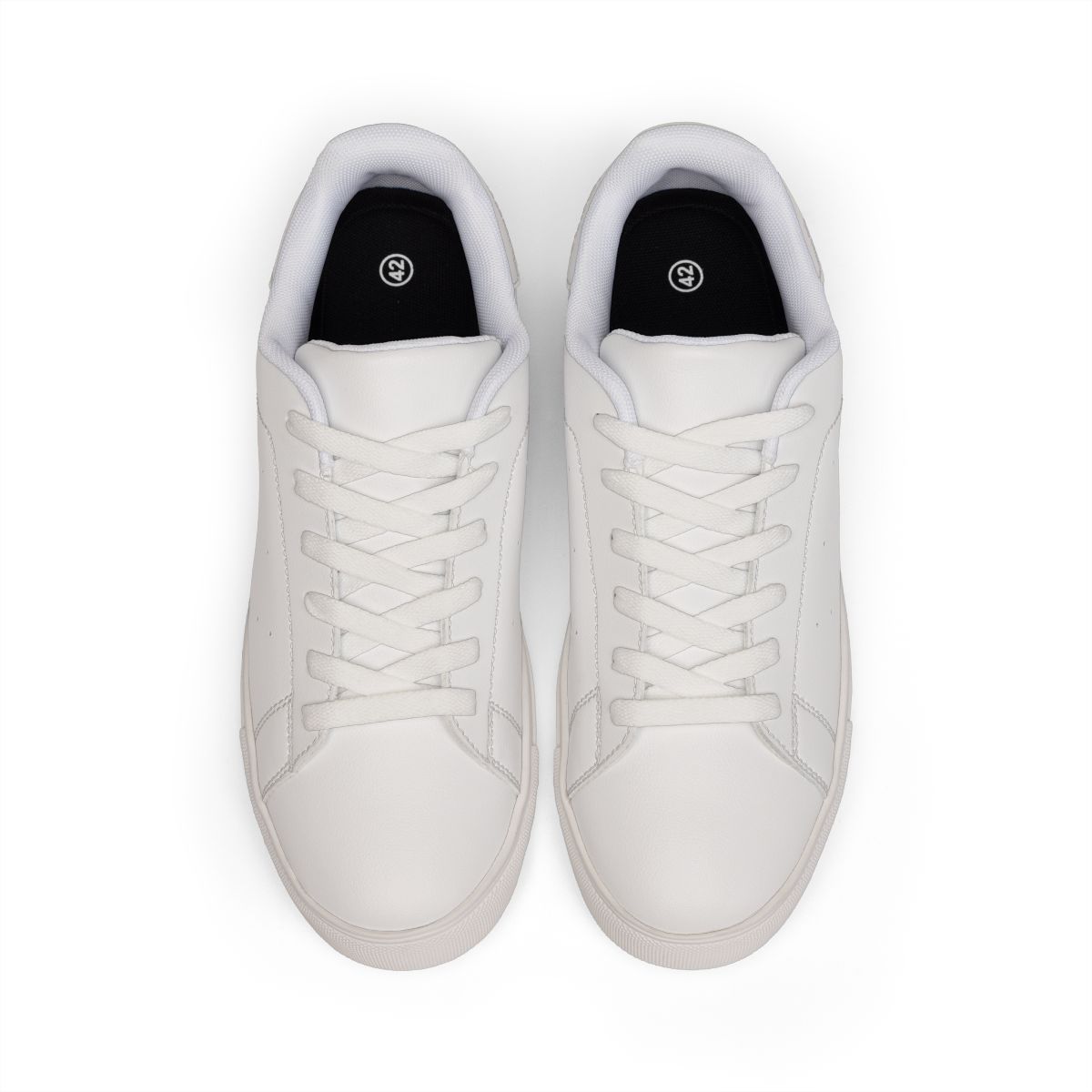
Custom Sneakers for Women, Leather Low-Top, with Your Photo
Custom Ornament, Glass New Home Keepsake with Your Photo
Custom Leather Sneakers for Men with Your Design
Custom Photo Keychain Charm with Your Picture
Custom Clear Bag, Clear and Black Stadium Tote, with Your Name
Custom Photo Keychain, Round Stainless Steel Keyring with Your Photo
Custom Photo Keychain for Boyfriend, Clear Square, with Your Photo
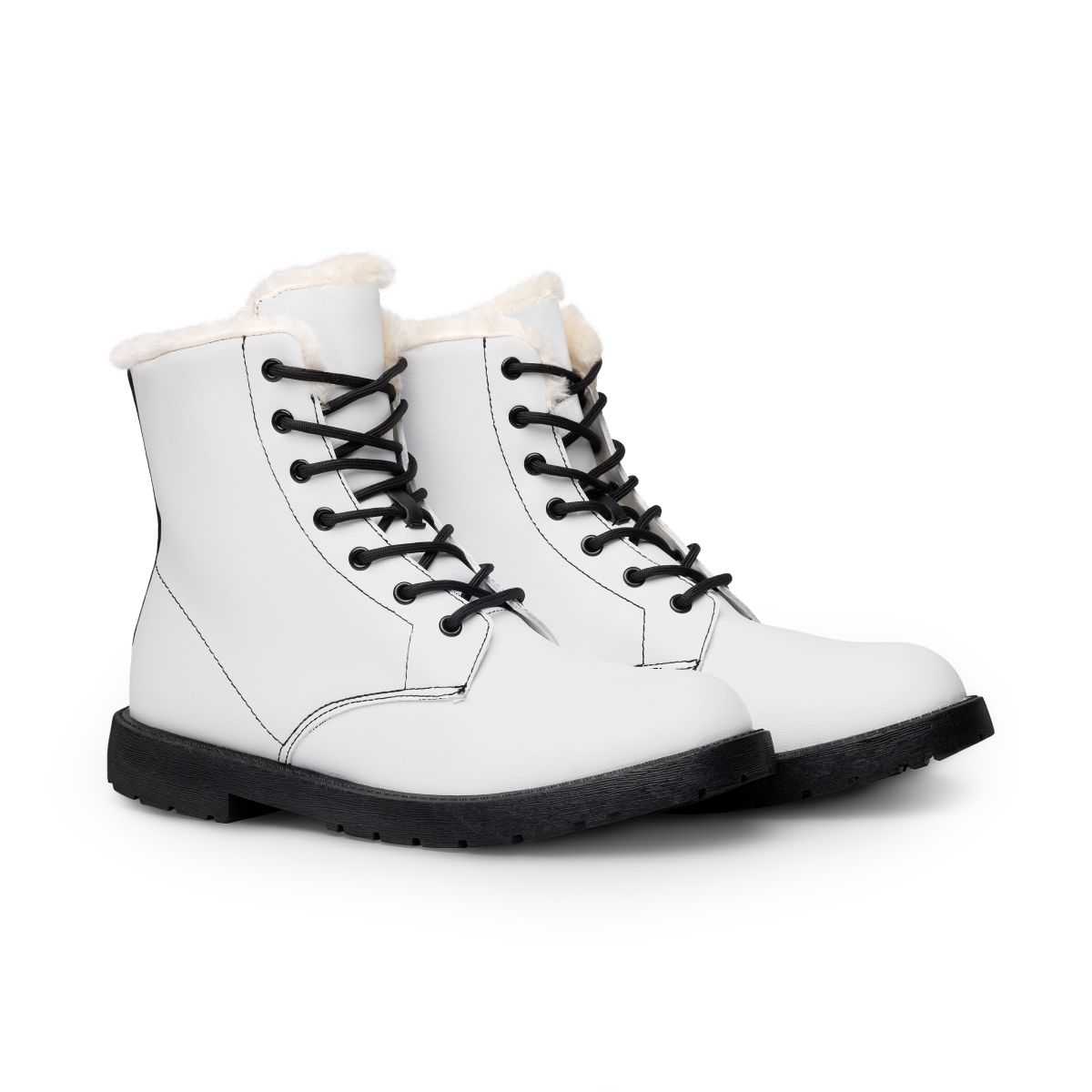
Custom Women's Plush Microfiber Boots with Your Photo or Text
Related methods
How we know this
- Supplier drinkware and UV printing guidelines — verified 2026-08-15
- BelDisegno production capability record — verified 2026-08-15