Printed on the surface
UV DTF
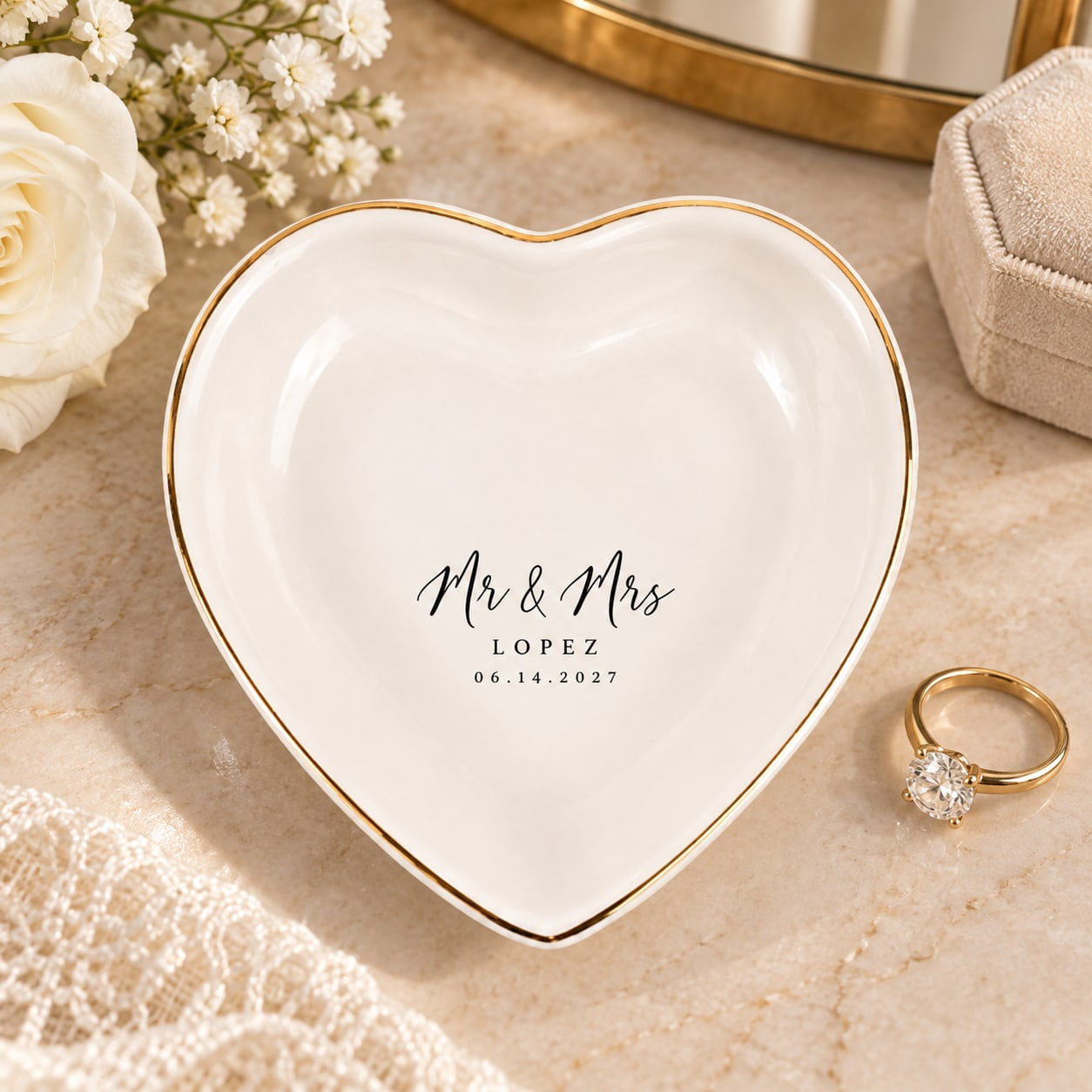
UV DTF prints your design onto a film and transfers it onto a hard item, where it sits as a raised layer on the surface. It is best for vibrant designs on hard, curved surfaces — our ceramic trinket trays are made this way — and it reproduces full colour with high vibrancy. The finished print is scratch and water resistant. Because it is a transfer with a defined edge, soft fades into transparency do not carry over; build your artwork with clean edges instead.
- Colour range
- Full colourHigh colour vibrancy
- Photographs
- Yes
- Soft transparency
- Not supportedFades print as a hard edge
- Feel
- Raised
- Durability
- Scratch and water resistant
- Surface
- Hard, including curved
- File formats
- PNG, JPG, SVG300 DPI at printed size
How it works
The name describes the process: the design is printed direct to film, then transferred from that film onto the item. The result is a layer that sits on top of the surface rather than soaking into it, which is why the finished print has a raised feel you can notice under your fingertip.
It is made for hard goods — including curved ones, where a flat print would be difficult to place. Today the method is used on our ceramic trinket trays.
What it reproduces well
Full colour, photographs and bright, saturated artwork all reproduce, with high colour vibrancy. Designs that rely on strong colour are exactly what this method is best at.
The printed layer is scratch and water resistant, so it suits an item that gets handled and set down every day.
Edges and transparency
Because the design is a transfer, it has an outline. Anything in your file that is partly transparent — a soft glow, a feathered shadow, a fade to nothing — cannot be reproduced as a fade and prints with a hard edge instead.
Give every element a clean, deliberate edge. If a soft effect matters to the design, flatten it onto a solid background colour inside the artwork so the transfer has a definite shape to follow.
What the preview can and cannot show
Your preview shows placement, artwork and colour. It cannot show the raised feel of the finished print, or how that layer catches the light on a curved surface — expect the real piece to look slightly different from a flat image in that respect.
Do this, not that
Do
- Use bold, saturated colourHigh colour vibrancy is what the method is best at.
- Give every element a clean, defined edgeA transfer follows the outline of your artwork.
- Supply 300 DPI artwork at the printed sizeResolution, not the process, is what limits fine detail.
Avoid
- Soft fades, glows or feathered shadows into transparencyPartial transparency prints as a hard edge, not a fade.
- Judging the finish from the flat preview aloneThe raised layer and its sheen on a curved surface do not show in a flat image.
Common questions
- What is UV DTF printing?
- A method where the design is printed onto a film and then transferred onto a hard item, where it sits as a raised layer on the surface. It reproduces full colour with high vibrancy and is best for vibrant designs on hard, curved surfaces.
- Is a UV DTF print durable?
- Yes. The finished print is scratch and water resistant, which suits items that are handled every day. It sits on the surface as its own layer rather than soaking into the material.
- Can UV DTF reproduce transparent or faded parts of my design?
- Not as a fade. Anything partly transparent prints with a hard edge, because the transfer follows the outline of your artwork. Flatten soft effects onto a solid background inside your file before you upload it.
- How is UV DTF different from UV printing?
- UV printing lays ink straight onto the item, so the material’s own grain and sheen show through the design. UV DTF is a printed transfer applied on top, so it covers the area it is applied to and has a raised feel rather than sitting flush with the surface.
Products made this way
Related methods
How we know this
- Supplier decoration-method description for UV DTF — verified 2026-09-30
- BelDisegno production capability record — verified 2026-09-30