Printed on the surface
Puff print
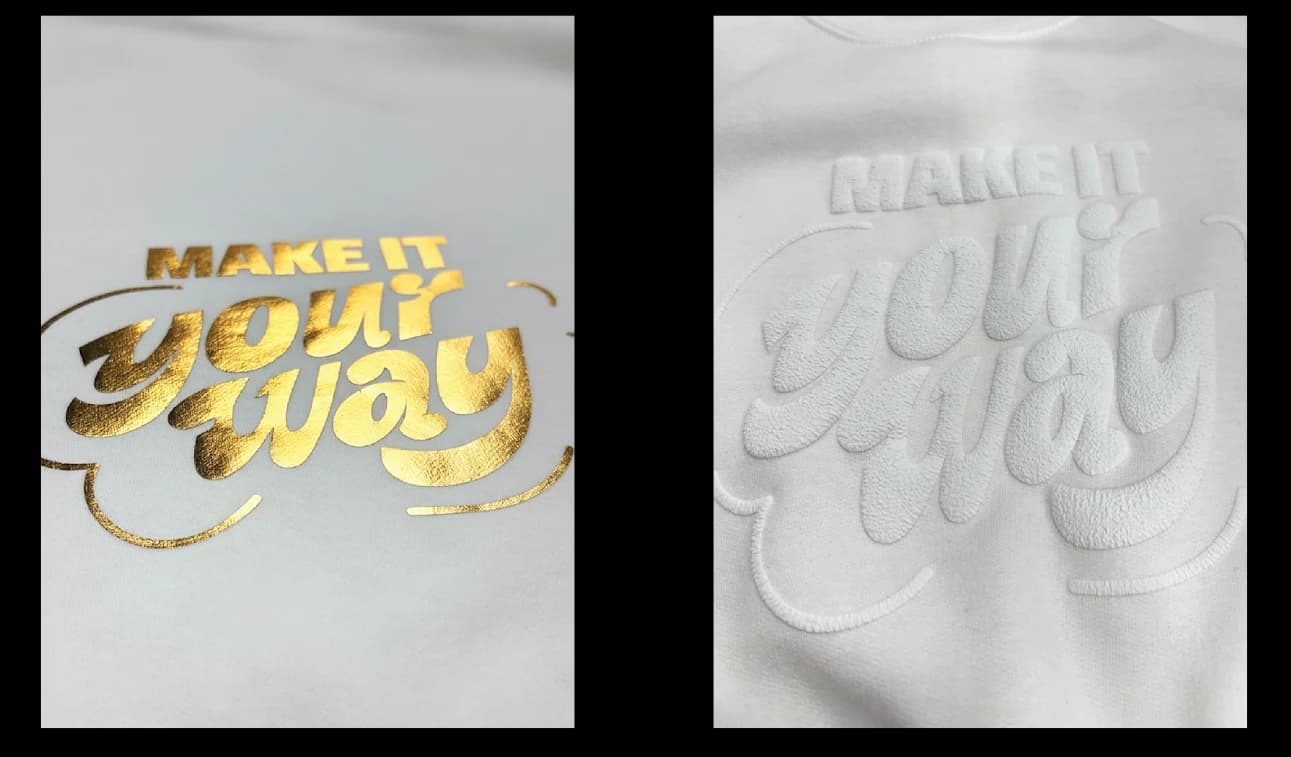
Puff print is a heat-applied ink that expands as it cures, raising your design a few millimetres off the surface into a soft, three-dimensional relief you can feel. It is the most tactile decoration we offer and it reads as genuinely premium. The trade is that expanding ink needs room: strokes, gaps and text all have generous minimum sizes, and large unbroken solid areas puff unevenly, so a puff design has to be drawn bolder and simpler than a printed one.
- Minimum line thickness
- 35–59 px (3–5 mm)Closer to 59 px gives a more pronounced rise
- Minimum gap between elements
- 35 px (3 mm)The ink expands about 20%
- Minimum text height
- 366 px (31 mm) / 88 pt
- Maximum text height
- 3449 px (292 mm) / 826 pt
- Maximum solid area
- 1181 × 1181 px (10 × 10 cm)
- File formats
- PNG, SVGTransparent background
How it works
Puff print is a design cut or printed from a specialty vinyl and heat-pressed onto the item. The material is what you are buying: it brings a physical property — height, sparkle, shine — that no flat ink can imitate, and none of it shows in a flat on-screen preview.
A foaming agent in the ink activates under the heat press and the design rises off the fabric. How high it rises depends on how much ink is there, which is why thickness is the governing constraint: a 35 px stroke puffs modestly, a 59 px stroke puffs dramatically, and anything thinner barely lifts at all.
Designing for expansion
The ink expands by roughly a fifth in every direction as it cures. That single fact explains all the minimums. Two elements 35 px apart will still be separate when they have both grown; two elements a third of that apart will merge into one shape. The enclosed centre of a letter O will close up entirely if the stroke around it is thin and the counter is small — which is why the minimum text height is 366 px rather than the 77 px a cut vinyl would need.
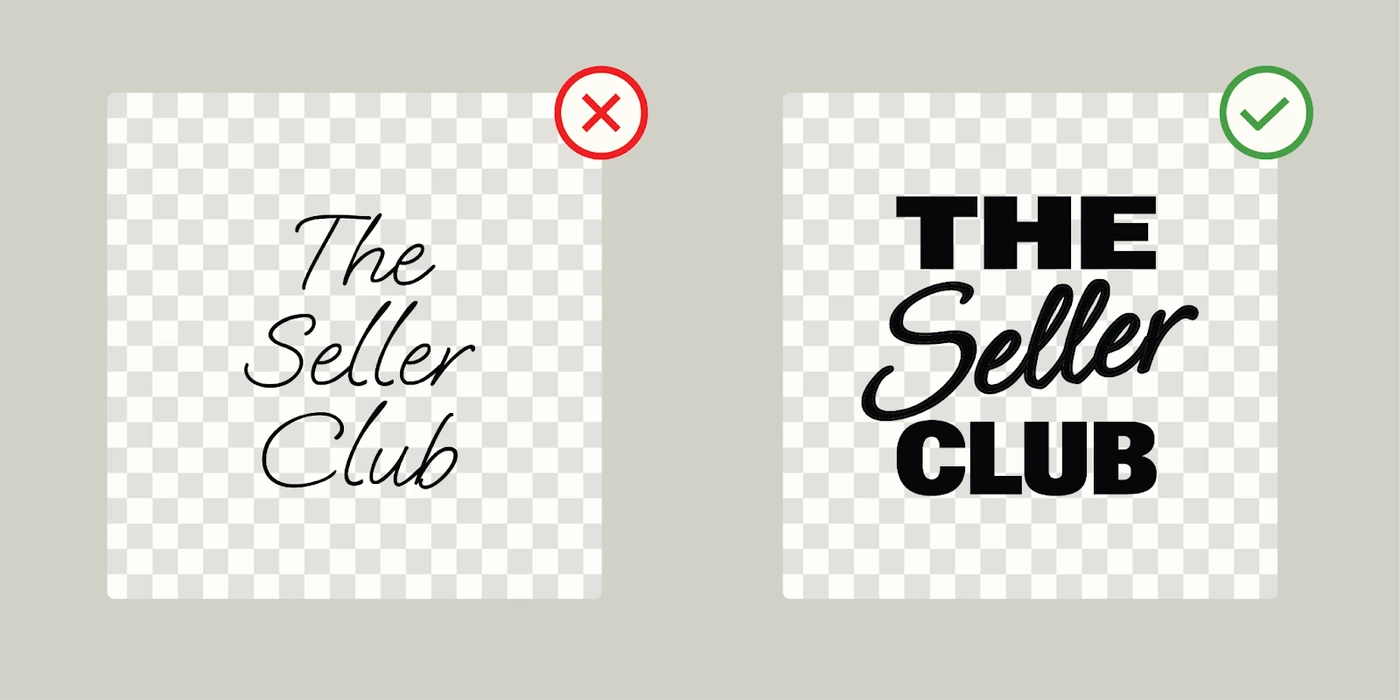
Bold, simple, sans-serif shapes are what this method wants. A thin script or a delicate serif face cannot survive expansion in any size that fits on a garment.
Why large solid areas are capped
A solid block larger than about 1181 px square puffs unevenly — the middle and the edges cure at slightly different rates, so the surface goes lumpy rather than smoothly raised. Large blocks are also the ones most likely to crack or wear badly, because a big continuous mass of raised ink flexes less than the fabric under it.
The way around it is to break large shapes up: outline instead of fill, add internal negative space, or split a solid mass into bands. The design keeps its scale and the puff stays even.
Do this, not that
Do
- Keep every stroke at least 35 px thickThinner strokes carry too little ink to rise.
- Leave at least 35 px between separate elementsThe ink expands about 20% and neighbouring shapes will otherwise merge.
- Set text at 366 px or taller, in a bold sans-serifBelow that, the enclosed spaces inside letters close up as the ink expands.
- Break large shapes into outlines or bandsSolid areas over 1181 px square puff unevenly and wear badly.
Avoid
- Thin scripts and delicate serif facesFine strokes and hairline serifs cannot survive expansion at any wearable size.
- Fine internal detail inside a puffed shapeDetail below the minimum stroke width simply fills in as the ink rises.
Common questions
- What is the minimum line thickness for puff print?
- 35 px (3 mm), and 59 px (5 mm) if you want a pronounced three-dimensional rise. Anything thinner carries too little ink to lift off the surface and will read as a flat print.
- How small can text be in a puff print design?
- 366 px (31 mm) tall (roughly 88 pt) is the minimum, in a bold sans-serif face. The ink expands about 20% as it cures, so at smaller sizes the enclosed spaces inside letters close up and the word becomes an unreadable block.
- Why is there a maximum solid area for puff print?
- Solid areas above about 1181 × 1181 px (10 × 10 cm) cure unevenly, so the surface goes lumpy instead of smoothly raised, and a large continuous mass of raised ink flexes less than the fabric beneath it and wears badly. Break big shapes into outlines, bands or areas of negative space.
- Will the preview show the raised effect?
- No. The on-screen preview shows your artwork flat, so it shows placement and colour but not the height. The lift is the reason to choose puff print and it is exactly the part a flat image cannot represent — order a sample if you need to see it before selling.
Products made this way
Related methods
How we know this
- Supplier heat-transfer-vinyl design guidelines — verified 2026-08-15